The President Bola Tinubu led administration is planning to spend N6.75tn of its projected N27.5tn budget on defence and security, education, and infrastructure in 2024 according to newsmen.
This is as it earmarked N6.48tn (96 per cent of the amount to be spent on the three sectors mentioned above) for personnel and pension, an increase of N576.16bn over the 2023 provision. The administration is also eyeing N10.4tn from tax, dividends and others.
1.3M
The Minister of Budget and National Planning, Abubakar Bagudu, disclosed this during the presentation of the 2024 budget breakdown.
Earlier, while presenting the 2024 Appropriation Bill, themed ‘Budget of Renewed Hope’ on the floor of the National Assembly, Tinubu said the budget proposal was aimed at completing critical infrastructure projects that would help address structural problems in the economy while lowering the costs of doing business for companies and the cost of living for the average Nigerian.
In his presentation, he declared, “The 2024 Appropriation has been themed the Budget of Renewed Hope. The proposed budget seeks to achieve job-rich economic growth, macro-economic stability, a better investment environment, enhanced human capital development, as well as poverty reduction and greater access to social security.
“So, a number of roads and railways, airports, housing and a number of infrastructure projects will be considered. the government funding is to capitalise private investment.”
Also, N534bn has been budgeted for social investments and poverty reduction programmes in 2024. The government expects to spend N10.26tn on non-debt recurrent expenditure, N8.25tn on debt servicing, N243bn on sinking funds, and N8.70tn on capital expenditures.
The minister further noted that the 2024 budget was prepared amidst the backdrop of a challenging global and domestic economic environment.
He declared, “This Prevailing global environment is characterised by slowing global growth; persistent inflationary pressures prompting monetary tightening with the inherent negative impact on capital inflow to emerging markets economies.
“Also constrained investment spending; supply-chain disruptions; and rising geo-political tensions, including the Russia and Ukraine war have severely affected global food and energy prices.”
While giving insights on the performance of the 2023 budget, Bagudu stated that Federal Government has gotten N8.65tn in revenues as of September 2023 with an oil revenue of N1.42tn and non-tax revenue of N2.50tn
Bagudu stated that the estimated aggregate expenditure for 2023 (inclusive of the supplementary budget) is N24.82 trillion, but actual spending has been N13.7tn.
President Bola Tinubu presented the budget of N27.5tn to a joint section of the National Assembly while urging firms in the country to join in infrastructure development across the country.
This is coming a few days after the Federal Executive Council approved the 2024 Appropriation Bill of N27.5tn, an increase from the N26.01tn earlier considered, and a $1bn budget support loan from the African Development Bank.
At the time, Bagudu also announced that some parameters of the recently approved Medium Term Expenditure Framework by the Senate had been changed by FEC.
He said, “That approved Medium Term Expenditure Framework has the exchange rate of N700 to $1 and equally, the benchmark crude oil price at $73.96 cent.
“However, in Mr. President’s determination to find more money to fund our priorities, today the Federal Executive Council further revised the Medium-Term Expenditure Framework and Fiscal Policy Framework and two of the important decisions were to use an exchange rate of N750 to $1 and also a benchmark crude oil reference price of $77.96, meaning $4 more than the earlier approval.”
According to the president, the country remains committed to meeting its debt obligations with projected debt service at 45 per cent of total expected total revenue.
He said, “Budget deficit is projected at N9.18tn in 2024 or 3.88 per cent of GDP. This is lower than the N13.78tn deficit recorded in 2023 which represents 6.11 per cent of GDP. The deficit will be financed by new borrowings totalling N7.83tn, N298.49bn from privatisation proceeds and N1.05tn drawdown on multilateral and bilateral loans secured for specific development projects.”
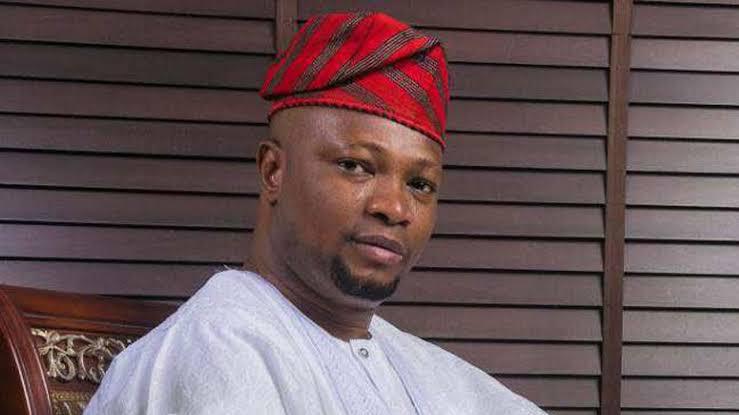
Lawmakers across the various party lines lauded the president’s budget, especially its attempt to reduce the budget deficit. Senator Jimoh Ibrahim (APC, Ondo South), said, “We have a budget of N9.7tn current expenditure and N8.7tn capital expenditure.
“For the first time, we have a budget that is not all going into the payment of salaries. This is even more than the 30 per cent benchmark in the last 10 years of having a budget presentation where 25 per cent is used for capital projects and the rest is spent on expenditure. Now the recurrent expenditure and capital project are very close.
“45 per cent debt servicing is not bad except that we have to borrow more remember last year debt to GDP was about six per cent but now debt to GDP is three per cent. We have a deficit financing of N8.7tn and that means that we are going to fund that on external borrowing.”
Buttressing his colleague, Chairman of the Senate Committee on Appropriations, Solomon Adeola, (APC, Ogunjobi West) stated that this was the budget that would benefit the country.
Adeola stated, “We have a budget whose deficits going down and the capital expenditure is going up. That shows that for the first time, we are having a paradigm shift and this we believe is going to continue.
“I believe this is a step in the right step and the president has also emphasised the issue of revenue generation drive. What stood out for us is the issue of revenue to ensure that the budget can be well funded. The president has done so well on the issue of revenue funding.”
“The budget is coming in a good time to allow us for it to be passed December 31. We are going to have a budget town hall to ensure that the budget is people-oriented. We would have a town hall where Nigeria can have a say.”
The opposition party has kicked against the actions of lawmakers when the president was in the house. When the President arrived at about 11:09 am, the national anthem was recited, led by the military band.
Thereafter, lawmakers at various angles in the chamber shouted ‘jagaban” to which the president responded with his hand for them not to turn the session into a rowdy one. After welcoming the opening prayer and, Akpabio’s speech, the military band led the song, ‘On you mandate we shall stand…” The song was accompanied by the voices of the lawmakers who shouted, “Bola… On your mandate, on your mandate.”
According to the Chief Spokesman of the Labour Party Campaign Organisation, Yunusa Tanko, the song was a subtle attempt by the APC to force Nigerians to accept Tinubu’s ‘illegitimate’ presidency.
He said, “The APC government is battling with legitimate issues. They also know that the judiciary has aided them in that illegality. What their members are also doing in the National Assembly is to stamp that same illegality down the throats of the Nigerian people.
“Most of those you found singing Tinubu’s anthem are members of their party, meaning that they know he does not have the legitimacy of being the president of the Federal Republic of Nigeria.”
Punch / Arafat Ayofe