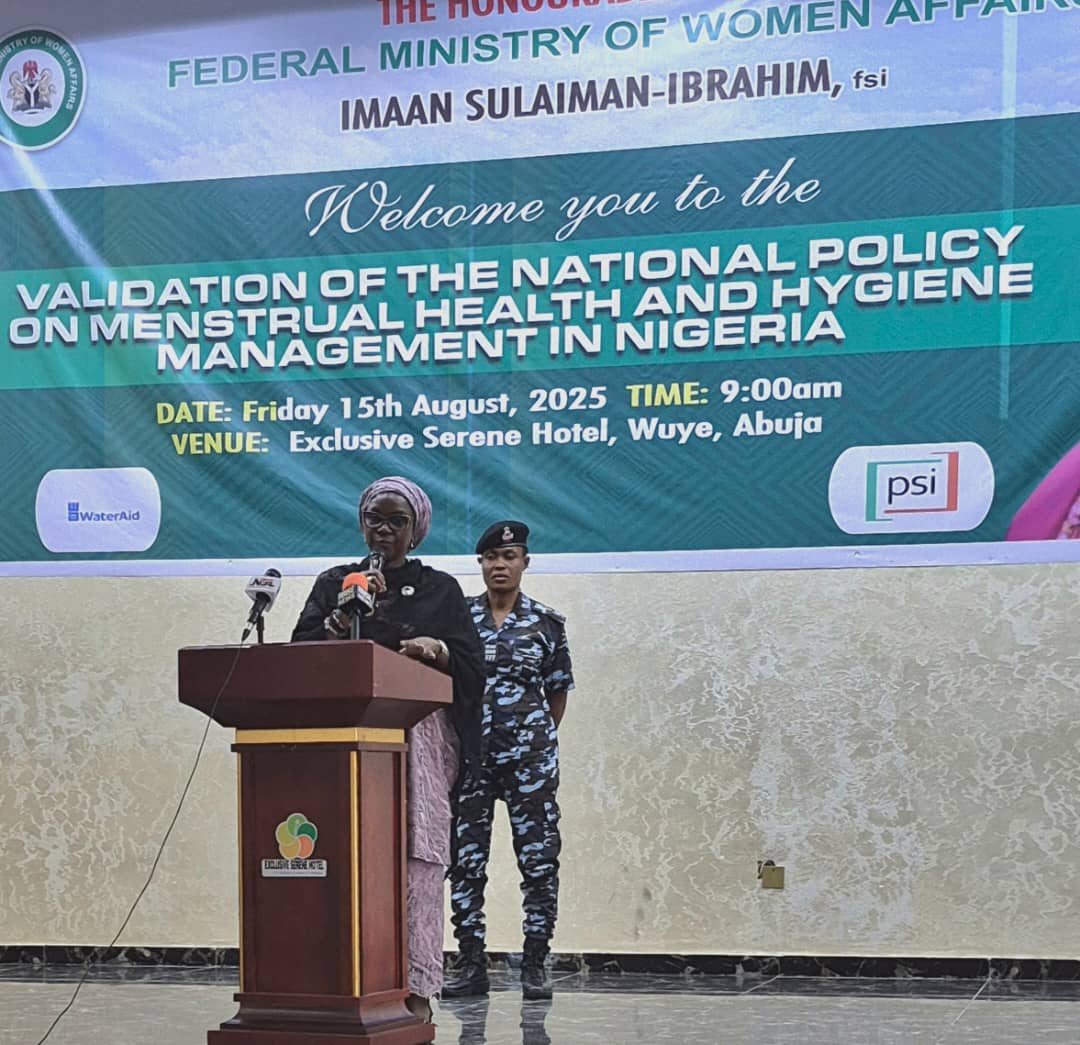
The Minister of Women Affairs and Social Development, Hajiya Imaan Sulaiman-Ibrahim, has disclosed that over 7.3 million adolescent girls and women in Nigeria suffer from under nutrition.
Hajiya Sulaiman-Ibrahim, also declared that 55 per cent of these population are affected by anaemia, a condition that can be exacerbated by poor menstrual hygiene and lack of affordable sanitary products.
The Minister made the revelation in a statement made available to newsmen at the end of a meeting where Nigerian government, in collaboration with stakeholders, validated and adopted Nigeria’s first National Policy on Menstrual Health and Hygiene Management (MHHM).
The Minister, who was represented by the Permanent Secretary in the ministry, Dr. Maryam Keshinro, noted that the recent waivers on sanitary towels by President Bola Tinubu, showed his deep sensitivity to gender and public health matters.
She explained that the meeting was held to address the challenges faced by women and girls.
The Minister also described the policy as a milestone toward ensuring that menstruation does not hinder the rights, opportunities, or wellbeing of any woman or girl.
She described menstruation as a normal biological process that should never be a source of shame, stigma, or economic hardship.
“Implementation will require strong collaboration across sectors, political will, and active participation from states, communities, and development partners”.
Acting Country Representative, Population Services International, PSI in Nigeria, Mrs Fifi Ogbondeminu, in her contributions, noted that the event marks a milestone towards ensuring that menstruation is no longer a silent burden but an issue addressed with dignity, empathy, and urgency
Ogbondeminu, who was represented by Team Lead for Menstrual Health Initiatives at PSI Nigeria, Dr Abdulhameed Adediran, described menstrual health as a human rights issue, a gender equality issue, and a development issue.
She emphasised the need to ensure the availability of low-cost menstrual products across rural and urban areas.
Dailypost/Toyosi Eniola