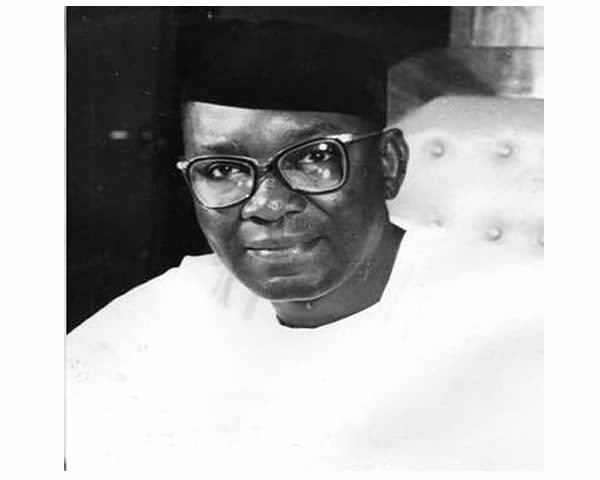
Former Niger State Governor, Dr Mu’azu Babangida Aliyu, has said that Nigeria’s founding father, Dr Nnamdi Azikiwe, made significant political compromises to ensure the survival and unity of the nation.
Dr. Aliyu said this at the sixth Annual Dr Nnamdi Azikiwe Award Lecture 2025 (121st Posthumous Birthday Celebration).
The event, themed “The Power of Pan-African Unity: Strengthening Nigeria’s Role in African Integration and Development,” was held in Abuja on Sunday.
Dr.Aliyu who was the Chairman of the National Planning Committee of the lecture, said that the early years of Nigeria’s independence were fraught with existential tensions, and Zik’s pragmatic decisions helped steer the fragile federation away from potential disintegration. 0:00
“Zik was a Nigerian even before Nigeria gained its independence. Zik was in the forefront of the independence of Nigeria. And you could see that he could, as a realist, compromise to ensure the survival of the nation.
“If you recall, before the coup of 1966, Dr Nnamdi Azikiwe entered a relationship between his party and NPC and became a ceremonial president. And indeed, during the Second Republic, again, his party and NPN came to ensure that Nigeria remains one.
“Therefore, anybody who, for whatever reason, is in love, regardless of their suffering, we must love our country.
“If we were to choose where to be born, probably many people would not want to be born in Nigeria. But since it was not a choice, your creator chose that you should be born here. It is only natural that you should be proud and love your country.”
According to Dr.Aliyu, in all religious dictums, loving one’s country is a principle — and this, he said, Dr. Azikiwe taught Nigerians.
The keynote speaker, Prof. Mainasara Umar-Kogo, Chairman of the Code of Conduct Tribunal, called for moral rebirth and Pan-African unity.
Prof. Umar-Kogo argued that despite the groundwork laid by founding giants such as Dr. Nnamdi Azikiwe, Kwame Nkrumah, Nelson Mandela and others, the continent remained shackled by failures of leadership, corruption and disunity.
He lamented that the ideals of the 20th-century liberation struggle had been betrayed in practice.
“Let us be honest with ourselves. What kind of house have we built after Zik? A house divided by ethnic strife cannot endure. A house corroded by corruption cannot inspire.
“A house without justice cannot lead. If Nigeria is to serve as a cornerstone of Africa, then our house must first be in order. A divided Nigeria cannot unify Africa.
“A corrupt Nigeria cannot inspire Africa. A lawless Nigeria cannot lead Africa, and that is the reason why Africa is in comatose state. Unity is a moral compass.”
Prof. Umar-Kogo explained that unity cannot be built on injustice, adding that the Pan-Africanism Zik stood for was not only an economic project but a political one that Nigerians should continue to uphold.
He emphasised Nigeria’s urgent need for principled leadership rooted in integrity, courage, justice and service.
He warned that leaders obsessed with wealth and power had replaced those who once saw leadership as a sacred trust to be accounted for “before God and history.
Punch/Timothy Kayode