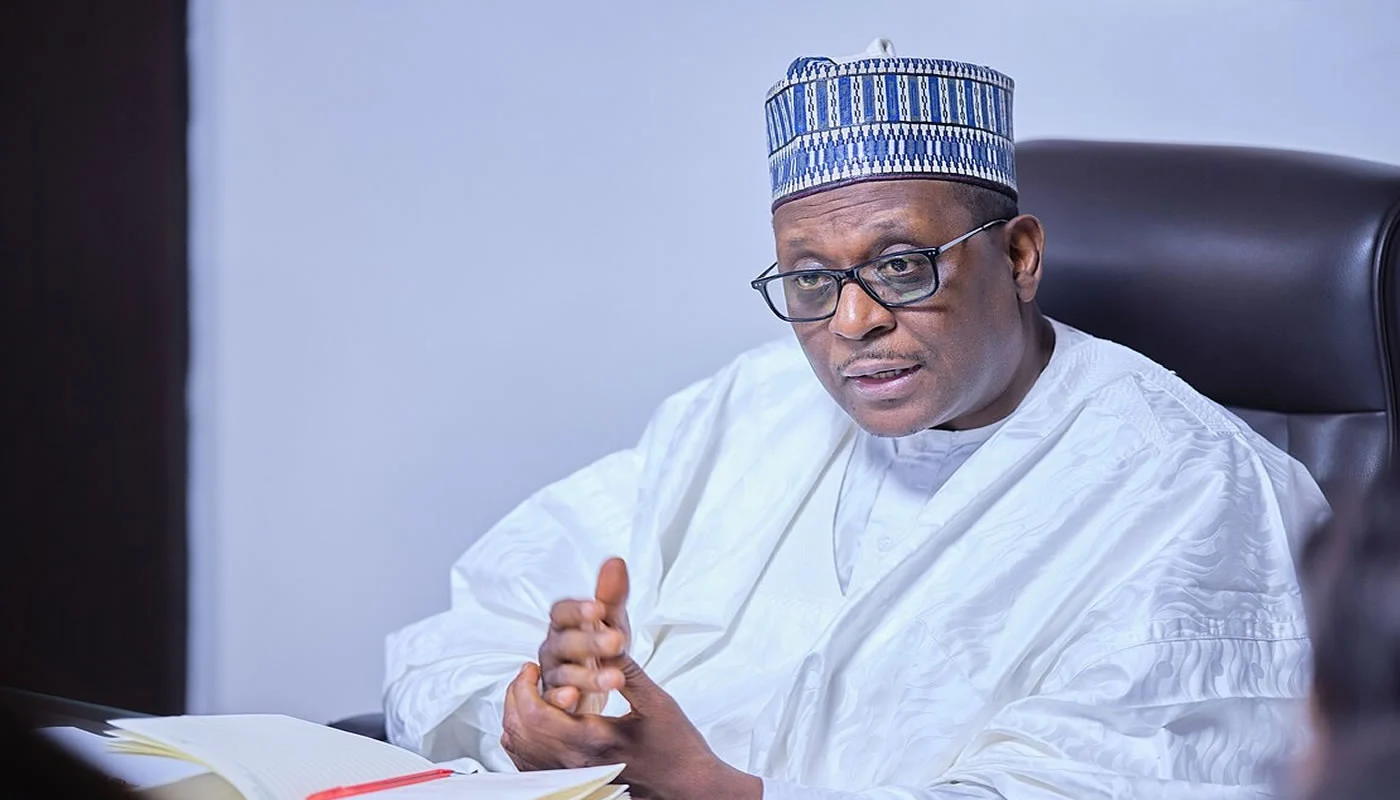
The Coordinating Minister of Health and Social Welfare, Dr. Ali Pate, has said that Nigeria has the capacity to respond effectively to medical emergencies, even as he acknowledged the need for increased investment in the country’s healthcare system.
Dr. Pate made the remarks yesterday while speaking on Sunday Politics, noting that although significant investments have been made to strengthen emergency care and medical facilities nationwide, sustained funding remains critical to improving healthcare delivery.
“I will tell you that every investment is required it’s been made to ensure that we have the facilities that will deal with emergencies. People can choose to stay at home for different reasons, historical reasons, and medical reasons. If you’ve had surgery, for instance, 10 years ago by a provider you did in Ghana, it’s logical that you want to go back to that provider, not because you don’t respect them, but if you have a new issue, it can be a problem, it can happen, I’d be tackled.
“We have a national eye hospital, an ear hospital. So there are those specializations that are available. The issue is that many of us don’t really know the depth of what exists in Nigeria. And so we run around without knowing that there are certain things that we can get here.
According to him, President Bola Tinubu’s administration has, over the past two years, increased healthcare funding from about 4 per cent in 2023 to over 5 per cent, showing a reasonable leap in the public resources injected into the sector.
He disclosed that with the ongoing health sector reforms, the administration highlighted four cardinal areas aimed at strengthening health insurance coverage, improving working conditions of health professionals, ensuring that quality care becomes more accessible to micro policyholders, and increasing international partnership and collaboration.
He added that the country also recorded significant successes in the areas of maternal mortality and malaria.
He further observed that 20 out of 36 state governments improved their performance in 2025 compared to 2024.
According to him, 8,000 basic healthcare facilities were given direct facility financing from the basic healthcare provision fund before the administration took over, but the access to the funding has been increased by 5,000.
As of the first quarter of 2025, according to him, more than 80 million visits were made to those basic healthcare facilities all over Nigeria compared to about 20 million in 2023.
The administration also immunized 59 million children during the most recent campaign, adding that between 2023 and 2025, in 172 Local Government Areas that have the highest burden of maternal mortality rate, it was reduced by 10 percent, as well as crossed 21 million in terms of health insurance coverage, against about 16 million.
While responding to the number of citizens covered by NHIS, he disclosed that 7 million Nigerians are insured in the informal sector, while 2.4 million are insured in the formal sector, adding that there are other Citizens covered in the informal sector.
He added that the 50 million Nigerians are being targeted over time, but this can be achieved by providing adequate funding to be provided.
He also disclosed that out of the six centres being constructed by the present administration, three cancer centers have been completed, while three cancer centers are underway.
Punch/Ibrahim Abiodun