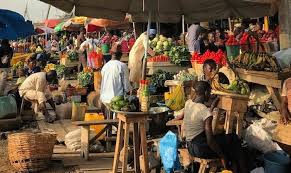
Nigeria is facing a worsening food security crisis, with over one million additional people experiencing severe food insecurity in 2024 compared to the previous year, according to a report by the World Bank.
The report attributes Nigeria’s growing crisis to a combination of climate-induced issues and socio-political instability in various regions.
The recently released Food Security Update Report highlights that countries like Nigeria, Ethiopia and Yemen have seen a significant rise in the number of people facing acute food shortages.
On the other hand, 18 countries experienced worsening situations due to factors including intensified conflict and climate-related shocks, such as droughts. Notable examples include Ethiopia, Nigeria, and Yemen, each witnessing an increase of more than one million people facing high levels of food insecurity from the previous year”.
The report stated that In Nigeria, an estimated 1.6 million hectares of land have been inundated, including 342,650 hectares of cropland, affecting 685,770 vulnerable individuals. In Mali, 344,000 people were affected and 1.6 million hectares of land flooded, including nearly 500,000 hectares of cultivated land,” the report noted.
“Cameroon, Central African Republic, Côte d’Ivoire, Gambia, Guinea, Guinea-Bissau, Liberia, Sierra Leone, and Togo have also faced flooding, and northern and northeastern Nigeria and Ghana are experiencing dry spells, with adverse effects on crop production and thus food insecurity.
“In total, floods and droughts have affected approximately 3.5 million people, who require emergency support. It is estimated that $50m is needed to help 760,200 communities meet their basic food needs.”
The report further reveals that domestic food price inflation in Nigeria remains among the highest globally, with food prices increasing by 37.5% year-on-year as of August 2024. This price surge has strained household incomes, making it increasingly difficult for low-income families to afford basic food items.
The bank called for urgent intervention to address the immediate food needs of affected populations.
Channels / Emmanuel Dada